

When should a child have a first dental checkup?
A child should have a first dental checkup when the first tooth appears, and no later than the first birthday. This recommendation applies even if the child seems comfortable and the teeth look healthy. The first visit is mainly preventive: it helps identify early concerns, establish healthy routines, and give caregivers guidance before problems become painful or harder to manage. ([cdc.gov](https://cdc.gov/oral-health/prevention/oral-health-tips-for-children.html?utm_source=openai))
For families in Chester, NJ, the timing can be especially easy to connect with a routine well-child visit or another early-childhood milestone. Waiting until preschool or until a child reports tooth pain is later than recommended.
Why is an early visit necessary if baby teeth fall out?
Baby teeth are temporary, but they still affect eating, speaking, sleep, comfort, and the spacing needed for permanent teeth. Untreated decay can cause pain and infection, and oral discomfort may interfere with participation in everyday activities. ([cdc.gov](https://cdc.gov/oral-health/prevention/oral-health-tips-for-children.html?utm_source=openai))
An early examination can also identify concerns that are not obvious at home, such as:
- Early tooth decay or weak areas in the enamel
- Problems with how the teeth or jaws are developing
- Irritation or injury to the gums
- Prolonged thumb, finger, or pacifier habits
- Feeding, oral-hygiene, or fluoride questions
- A need for additional preventive support
The visit creates what dental organizations call a “dental home”—an ongoing source of age-appropriate preventive guidance and evaluation. It does not mean a young child automatically needs extensive treatment.
What happens during the first checkup?
The first appointment is usually brief and focused on examination, prevention, and education. Depending on the child’s age and comfort, the dental professional may:
- Look at the teeth, gums, tongue, and other visible areas of the mouth
- Check for early signs of decay or developmental concerns
- Review brushing, feeding, snacks, and drinks
- Discuss fluoride exposure and whether fluoride varnish may be appropriate
- Ask about thumb-sucking, pacifier use, or teeth grinding
- Explain how to respond to a dental injury
- Recommend an appropriate follow-up interval
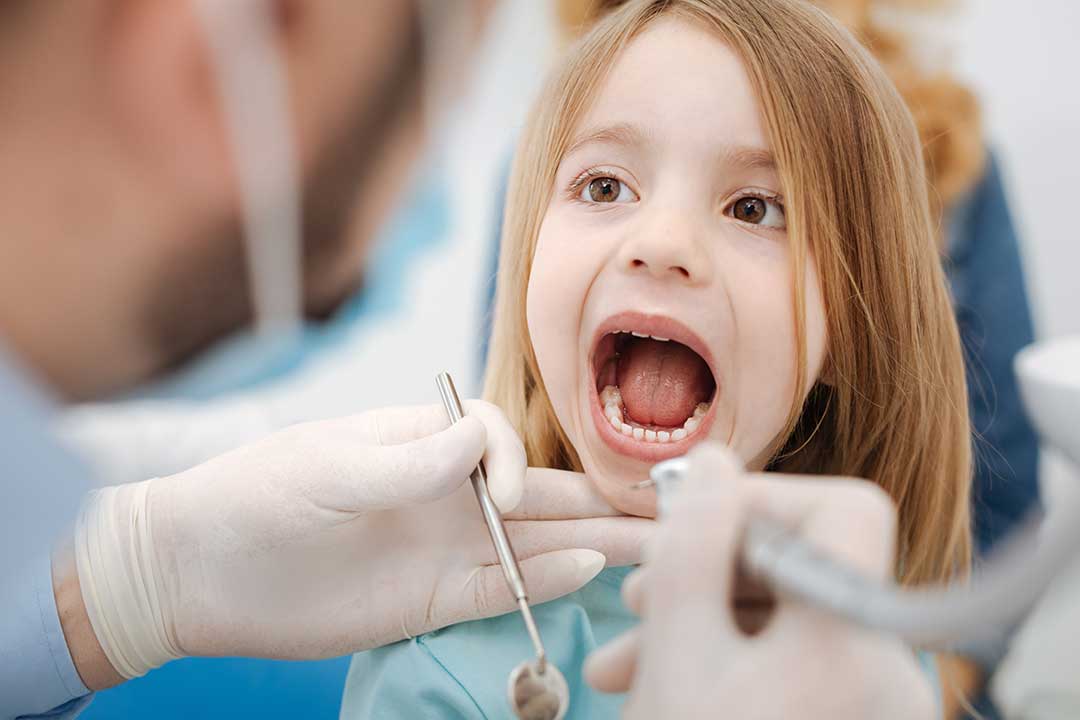
A very young child may sit on a caregiver’s lap while the mouth is examined. The appointment may not include X-rays, especially when there is no specific concern and the child is too young to cooperate comfortably. Diagnostic images are generally considered when they are clinically useful.
The goal is not to make the child complete every possible procedure. It is to make oral health familiar and to detect preventable problems early.
How should parents prepare a toddler?
Preparation should be simple and calm. Children often take emotional cues from adults, so neutral language is usually more helpful than warnings about pain or needles.
Before the visit, caregivers can:
- Explain that someone will count and look at the teeth
- Read a children’s book about visiting a dental office
- Avoid using the appointment as a threat or punishment
- Bring a comfort item if it helps the child cooperate
- Share information about allergies, medications, medical conditions, and previous oral injuries
- Tell the dental team about anxiety, sensory sensitivities, communication differences, or developmental needs
Scheduling the appointment at a time when the child is normally rested may also help. For families managing school, work, and changing seasonal routines in the local community, planning ahead can prevent an appointment from falling during a child’s usual nap or meal period.
What should happen at home before and after the first visit?
Before the first tooth erupts, gently wipe an infant’s gums with a clean, soft cloth. Once a tooth appears, brush twice daily with a small, soft-bristled toothbrush. Fluoride toothpaste should be used in an age-appropriate amount, with guidance from a dental professional or pediatric health provider for very young children. ([cdc.gov](https://cdc.gov/oral-health/prevention/oral-health-tips-for-children.html?utm_source=openai))
For children younger than 3, the commonly recommended amount is a smear about the size of a grain of rice. From ages 3 through 6, use no more than a pea-sized amount and supervise brushing so the child spits rather than swallows the toothpaste. ([cdc.gov](https://www.cdc.gov/mmwr/volumes/68/wr/mm6804a3.htm?utm_source=openai))
Other helpful habits include:
- Avoiding frequent sipping of juice, sweetened drinks, or milk overnight
- Offering water between meals when appropriate
- Limiting repeated exposure to sticky or sugary snacks
- Brushing before bed and not sending a child to sleep with a bottle containing anything other than water
- Helping with brushing until the child has the coordination to do it reliably
Cold weather, indoor heating, travel, and holiday routines can make regular brushing and snack patterns less consistent. Keeping a child’s toothbrush and routine in the same place can make these seasonal disruptions easier to manage.
Is the first birthday already too late?
No. If a child is older than 12 months and has not had a dental checkup, the next practical step is to arrange an initial evaluation rather than waiting for symptoms. A late first visit can still provide useful prevention and identify problems that may not yet be causing discomfort.
Children should be seen sooner than the first birthday if a caregiver notices a white or brown spot, a chipped or injured tooth, swelling, bleeding that does not have an obvious explanation, persistent mouth odor, difficulty eating, or signs of dental pain. Facial swelling, fever associated with a tooth problem, or trouble breathing or swallowing requires prompt medical attention.
How often should children return?
After the first examination, the recommended interval depends on the child’s age, oral-health findings, cavity risk, habits, fluoride exposure, and ability to cooperate with care. Many children receive routine checkups about every six months, but that is not a universal rule. Some children need more frequent monitoring, while others may be safely seen on a different schedule.
The most useful approach is to follow the individualized interval provided after the examination and continue daily brushing at home. Regular preventive care is more effective than waiting until a child has pain, swelling, or visible damage.
What is the main takeaway for families?
The clearest guideline is: first tooth or first birthday, whichever comes first. The initial checkup is an opportunity to establish healthy habits, assess risk, answer caregiver questions, and make dental care a familiar part of childhood rather than an emergency response. National public-health and dental organizations support this age-one approach because early evaluation can help prevent or manage disease before it becomes more complicated. ([cdc.gov](https://cdc.gov/oral-health/prevention/oral-health-tips-for-children.html?utm_source=openai))